Confessions of a Tattoo Artist
Tattoos went from sailors and circus freaks to soccer coaches and grandmothers. Three working artists, one hardcore punk singer among them, on what the craft gains and loses when the underground goes mainstream.
Tattoos are everywhere. In recent years, the ubiquity of, and public fascination with, tattoos have spawned reality television shows such as Miami Ink. Even luxury designers such as Louis Vuitton, Thierry Mugler, and Christian Audigier have caught onto the rage and have prominently featured tattoo imagery in their advertisements and clothing lines.
Today, tattoos are no longer taboo, or associated with those on the margins of society like the sailors, soldiers, convicts, and circus freaks. In current pop culture, one can see hipsters, teenage daughters, soccer coaches, fashion models, and yes, even grandmothers with a tattoo. Yet, despite their ubiquity, they remain one of the purest forms of individual self expression.
The massive exposure of tattoos has cultivated a multimillion-dollar industry that supports tattoo artists and their craft. I spoke to tattoo artists Matthew Wojciechowski, David Allen and Shawn Brown to get their thoughts on an underground industry that has gone mainstream.
Jinx Proof is one of the most celebrated tattoo parlors in Washington, D.C. It also happens to sit in the heart of Georgetown, one of the district’s most affluent neighborhoods. Surrounded by luxury boutiques, Georgetown is the least likely location for anyone to find a tattoo shop.
Jinx Proof runs like many other tattoo shops in the country. As a business, it has a large number of walk-in clients, and a faithful following of customers who want custom designs, and who are willing to pay top dollar for it.
When I arrived there to meet resident artist Matthew Wojciechowski, he was with a female customer who wanted to get diamonds tattooed behind her ears. I observed the woman—she was young, Asian, and trendy—not whom one would consider a typical client. It struck me then, as I observed her with her friends, that tattoos were once the ultimate expression of defiance, and this woman picked out her tattoo like a dress she was buying at a Georgetown boutique.
How far we have come.
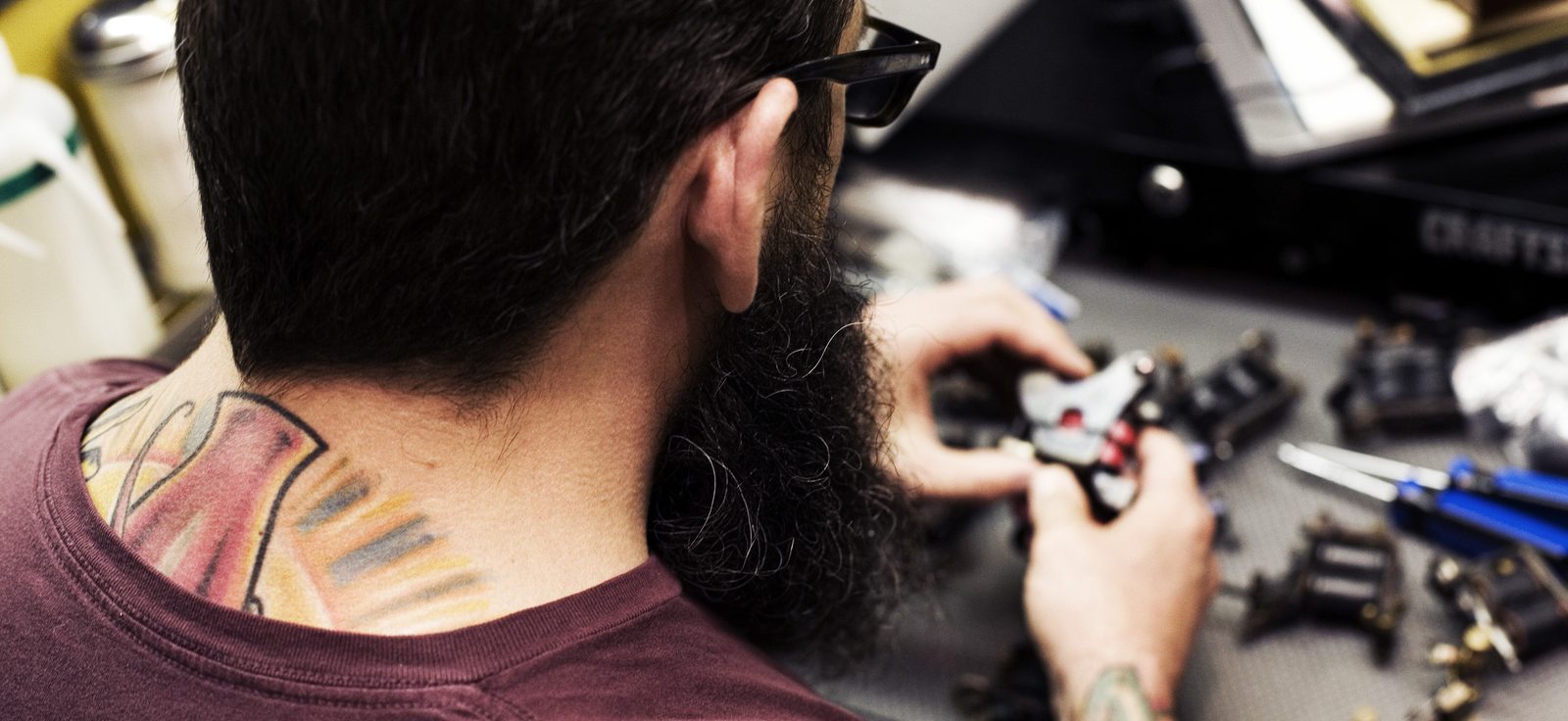
Tattooing for 19 years, Wojciechowski began his career as an apprentice and later worked at, and owned a number of different shops around the country. One of the most striking things about him is his full salt and pepper beard that runs at least six inches long below his chin; and while one may assume that those in his trade are loud and brash, he is introspective and has the even tone and quiet confidence of a skilled artisan who understands his work.
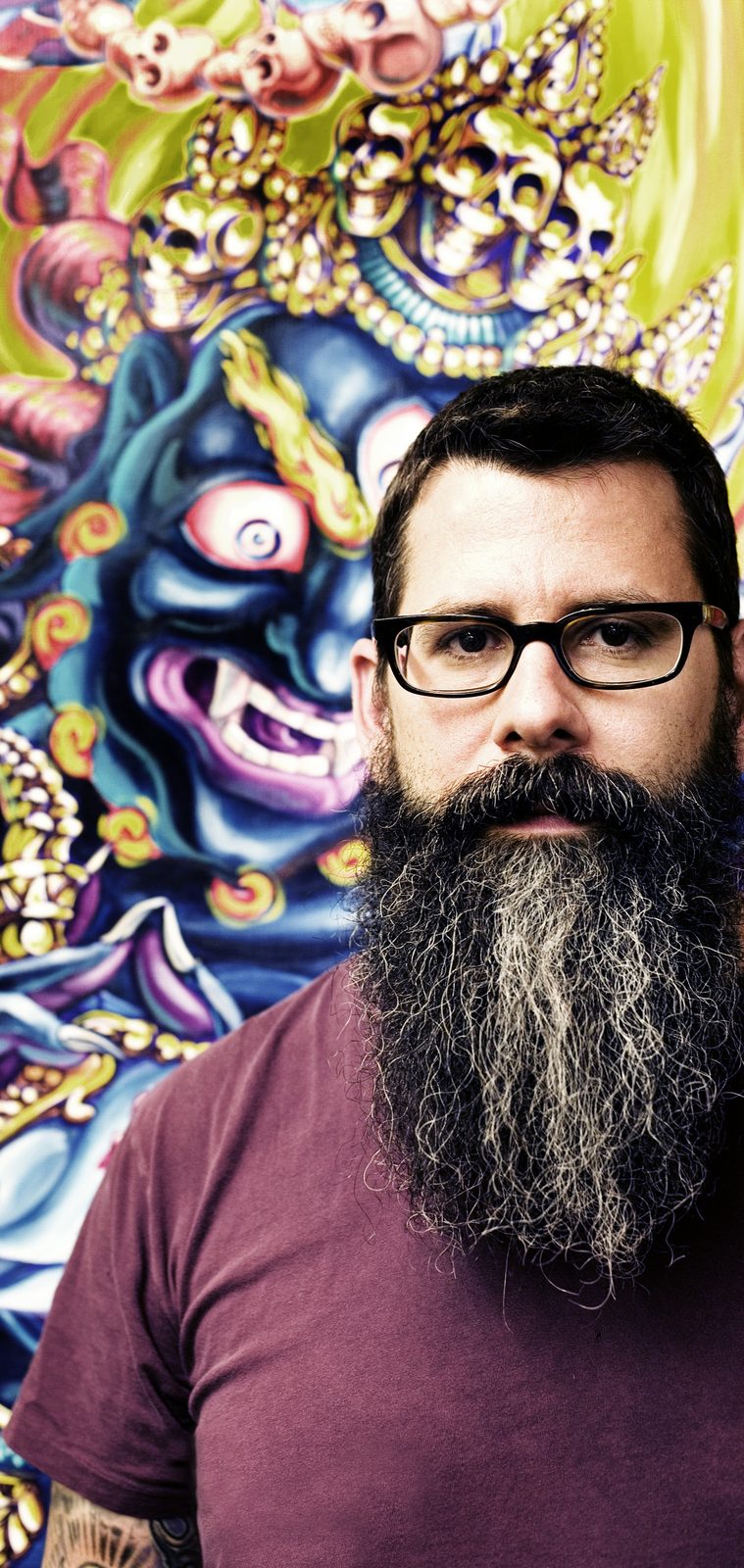
While Wojciechowski appreciates the current popularity of tattooing, and the concurrent uptick in business, he speaks fondly of the days when tattooing was an underground art and tattoo artists were more invisible. He struggles with the “tide of bad tattooing” that is coming from new tattoo artists who are drawn into an industry that has entered mainstream culture and believes that the industry needed a set of standards to protect the craft.
“[Tattoos should] look the way they are supposed to,” said Wojciechowski, who believed that tattoos should have solid color and smooth shading. “And if [one sees] the design on paper it should look like that.”
Wojciechowski would also like to see the “peripheral shops” and those “artists [who are] not taking it seriously” exit the industry. And while he does not watch tattoo-related TV shows, he does not object to them because he believes he got several clients a week as a result of them.
David Allen’s enthusiasm for tattooing was infectious and readily apparent when I spoke to him. Regularly traveling between Baltimore and Chicago, he worked out of shops in both cities. Allen has the confidence of someone who has worked hard to perfect his skills and yet, maintains the youthful excitement of someone who continually discovers something new in his trade. And perhaps what was most telling about him related to the intersections of his personal life and career. The birth of his son was an impetus for him to seek stability in being a full-time tattoo artist.
Allen attended art school and was a freelance graphic designer and illustrator before he apprenticed with two notable artists, Drew Thomas and Monte. Allen describes his design aesthetic as “realistic with graphic undertones.” In approaching his work, he focuses on the overall aesthetic of a tattoo and how it conforms to his customer’s body, as opposed to an old school approach where a tattoo was simply a “sticker.”
Allen has a philosophical approach to tattooing and places great value in developing a relationship with his customers. When discussing tattoos with clients, he seeks to understand their background, personal life, and jobs, as well as how the new tattoo would be incorporated into their life. Allen sees himself as a “translator” who takes the reference materials and desires of customers and interprets them into the most appropriate tattoo for them; and he dislikes jaded artists who dismiss their clients’ desires and are too lazy to push themselves in their craft.
Similar to Wojciechowski, Allen thinks the increased acceptance of tattooing has benefited the industry. “[I once] tattooed a 70-year-old guy that hated tattoos because of his upbringing,” Allen said, “but [he] decided that they were okay and wanted to get a tattoo that meant something to him.” The man told him that his change of heart “was directly related to watching a TV show.”
Shawn Brown is a rock star. No really, he is a rock star who is well known in the D.C. hardcore scene for providing vocals for the bands Dag Nasty, Swiz and Jesus Eater. For the past several years, Brown has worked out of the Tattoo Paradise shops in Wheaton, Maryland and Washington, D.C.
Brown is a humble tattooer who approaches tattooing much like a craftsman who has a deep respect for its history, its tools, and those artists who came before him.
Unlike Wojciechowski and Allen, Brown took a circuitous path to his current career. After years of drawing and inquiring at tattoo shops about apprentice work, he became discouraged and moved onto music. A few years later, his friend got him a job working at the counter of a new tattoo shop and as payment, the artists would teach him the craft.
It was in his apprenticeship that Brown learned the fundamentals; and his work was thoroughly grounded in the traditional techniques and styles of tattooing. Brown preferred clean lines, smooth shading, and a limited color palette, like that of the five-color palette which was popularized by the famous and late tattoo artist, Sailor Jerry Collins.
For Brown, respecting traditional tattoos is important. If an artist, he said, “[drew] a Koi fish with a head shaped like a penis, and the colors [used were] black, lime, green and purple,” they have not drawn a Koi fish as traditionally understood.
For a traditionalist, Brown is surprisingly open to his industry being incorporated into the mainstream, and sees the growth of the industry as providing space for customers and artists to pursue their own interests. He defends the rights of established artists who have taken their work into more commercial pursuits such as tattoo artist, Ed Hardy. However, he does not agree with the commercialization of tattoo images by those outside of the industry, such as the liquor and clothing companies.
Moreover, Brown states that more than any other means of expression including music, clothing and art, tattoos are a permanent form of self expression. “Tattoos are one of the only things you can literally take to the grave,” he said.
“Tattoos are one of the only things you can literally take to the grave.”
This permanency makes the selection of a tattoo artist, design, and placement all the more individualistic. In the end, Brown, as well as Wojciechowski and Allen, acknowledge that tattoos were markers of self expression that are based on individual desires rather than needs.
From the MO print archive: this story first ran in The Premiere Issue of Meets Obsession Magazine. Shop affiliations are as they were at the time.
- Words: Stanton Lawyer
- Photographer: Kate Reeder
Keep it loud