Does Washington D.C. Have a Future in Fashion? A Look Inside the District’s Budding Fashion Industry
Pop-ups, bloggers and boutique rebels try to shake the capital out of its navy suit, while the city’s own red tape fights them every step.
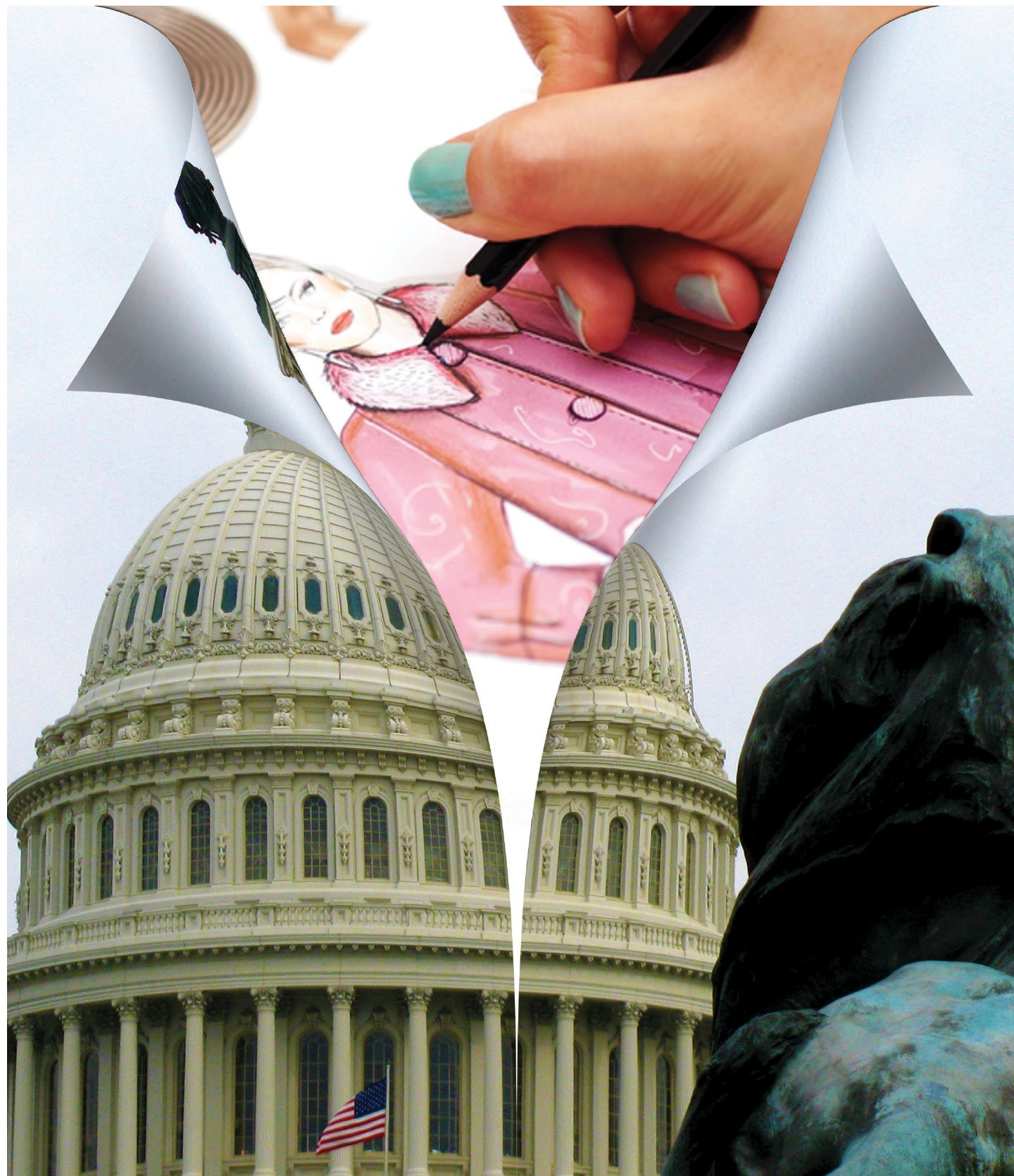
After the catastrophe that resulted from MTV’s “The Real World XXIII: Washington, D.C.,” a joke picked up speed with Washingtonians about the District’s double-faced coin: there’s Washington on one side, the nation’s government, a political locus and home to over 160 monuments and memorials, and D.C., a thriving and distinct urban center with a bad rap, is on the other. And no one outside of the city was aware that this creative “D.C.” side existed.
Within the city limits, if you travel far enough in any direction from “Washington,” you’ll find a patchwork of economically developing neighborhoods that are home to an array of creative entrepreneurs from all sectors: visual, performing and literary artists, musicians, foodies, and D.C.’s newest wing, fashion and style entrepreneurs. These are the Washingtonians who are changing the face of the city fondly known as “Hollywood for Ugly People.”
The nation’s capital is beginning to look and act, well, stylish. And the designers, retailers, bloggers, fashionistas and assorted glitterati that are now choosing to make the city their home are responsible for the change.
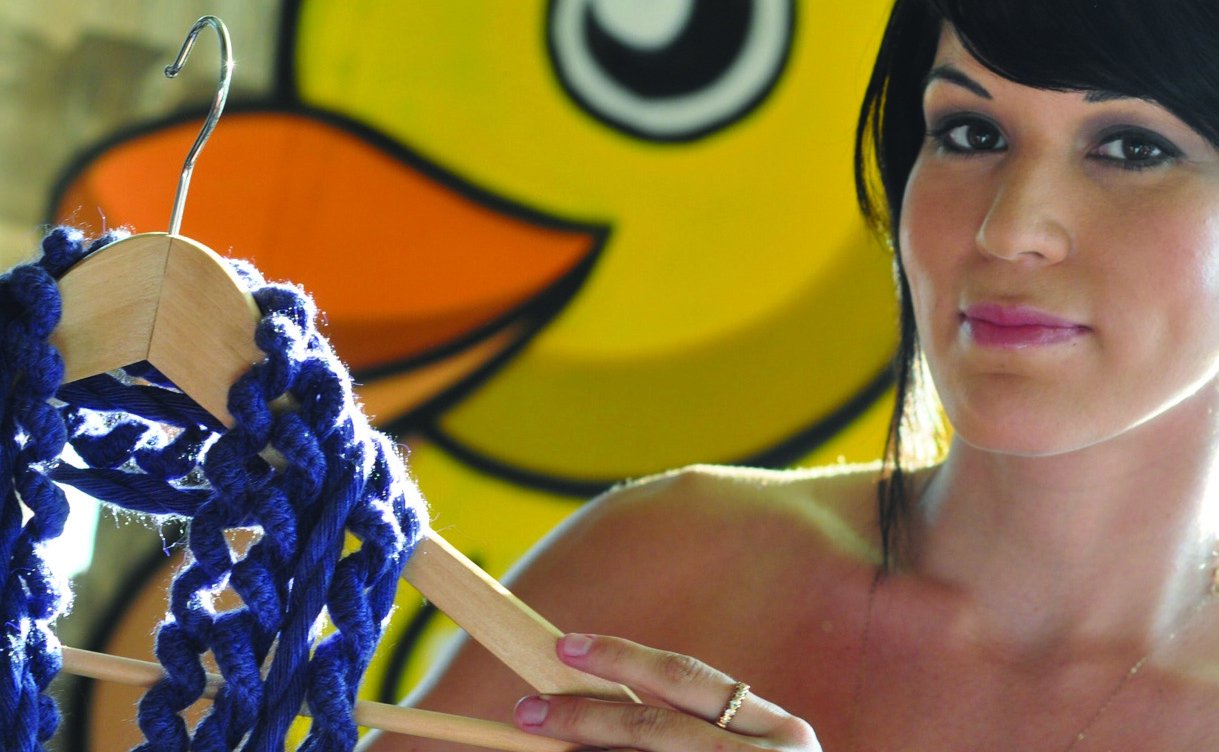
“We don’t have to be the boring sea of navy JoS. A. Banks/Ann Taylor Loft everyone thinks we are,” says Erin Derge, co-owner and one half of the Gingers who founded the local, and eco-friendly, boutique Ginger Root Design.
Up until the mid 2000s, D.C. did its best to cultivate a reputation for a staid, conservative style; a city that couldn’t be bothered with the whimsy required to find a well-tailored suit.
“It was about seven years ago when the luxury magazines came to town and new retailers like Intermix came into the market, that things really started to change,” recalls Aba Kwawu, owner of local fashion consulting firm Aba Agency.
Intermix is now just a bit player in a cast of national and international retail characters that range from Rag & Bone in Georgetown to Zara in Penn Quarter and Jimmy Choo in Friendship Heights. Not to mention a new wave of home-grown fashion and style entrepreneurs has begun to spread throughout the District as well.
When President Barack Obama moved into the White House, he ushered in a freshness of vision that gave Washingtonians license to revise what they wanted their city to look and feel like, a time period that would ultimately set the stage for the bootstrapping of the burgeoning D.C. fashion community.
After eight years under the thumb of the Bush Administration, Obama’s promise of hope and change was infectious in the nation’s capital. Everyone agreed: a new administration meant a new influx of people, and these new people were going to be different. Out went old, conservative Texas and in came the young, brainy, artsy urbanites that defined the Obama team.
A renewed energy began to drive the creative class. With an already thriving theater scene (the nationally-revered Arena Stage, Shakespeare Theater Company and the behemoth Kennedy Center for the Performing Arts all call the capital home) and the flagship location of the Smithsonian Institution, D.C. was primed for the resurgence of this community.
To boot, despite dire predictions, D.C. remained largely immune to The Great Recession that wracked the nation shortly after Obama took office. The mothership that is the Federal Government, and all of its associated businesses, managed to keep the local economy largely afloat. During this era, D.C. gave rise to lynchpins like cross-disciplinary arts philanthropist Philippa Hughes, founder of The Pink Line Project. Hughes brought a rare quality to the creative community: the ability to forge relationships that transcended the entrenched boundaries between the creative, commercial and government sectors.
She also propelled a new creative model in D.C.: the Pop-Up. Soon pop-up art spaces (temporary projects that sometimes last a month, or frequently only a weekend, wherein artists produce work) abounded in vacant storefronts and the oddest places (a food truck museum, the old police evidence warehouse).
With the creation of the first Temporium in 2010, located in the surging (read: gentrifying) Atlas District, led by Hughes and funded by the D.C. Office of Planning, a “Plug and Play” business formula was created.
The Temporium instilled an idea that moved beyond the paradigm that visual, literary, music and performing arts encompass the totality of what D.C. has to offer creatively. Fashion design and retail became an essential element in the success of these temporary projects.
Temporiums, pop-ups and niche local boutiques were key to developing the climate required for local designers, retailers and style entrepreneurs to grow into independent businesses. Pop-up project directors used the creative class to connect heavyweights like commercial real estate developers and the government with the new wave of young, liberal and, this part is key, affluent consumers who were choosing to make D.C. their home.
While art diplomats like Hughes started work, the social media maven-cum-party mogul Svetlana Legetic, founder of the media empire Brightest Young Things, buoyed the financial impact of the aforementioned model by introducing major sponsorships like Vitamin Water to the formula. These companies brought the marketing dollars and presence necessary to raise the profile of the whole operation.
As a result, D.C.-based fashion and style entrepreneurs began to get more and more attention from the people who had the dollars to fuel their growth, and the D.C. style community as a whole started to look legit in the eyes of Washingtonians.
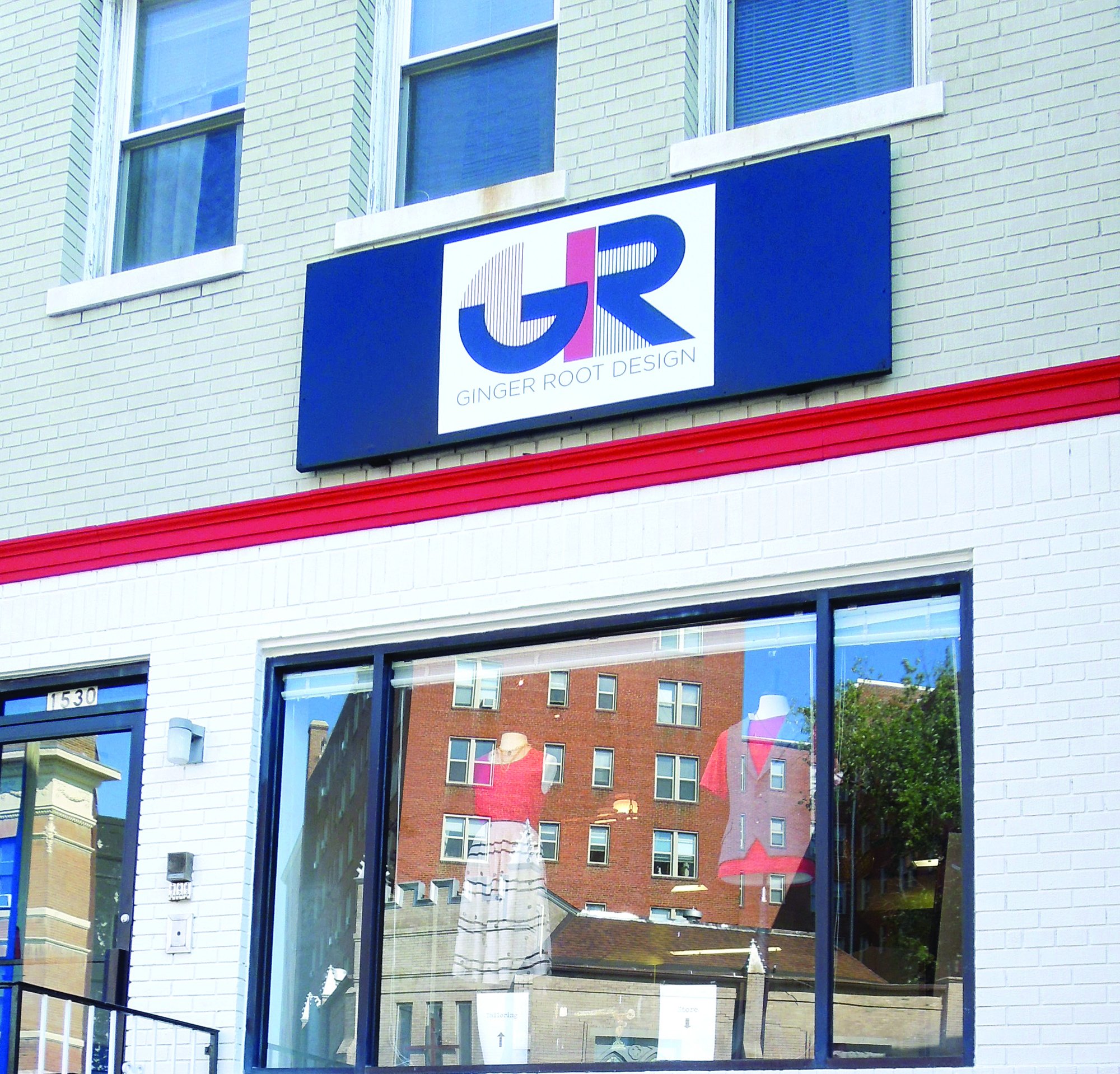
Many company owners found their start in the now pervasive pop-up model, such as Cathy Chung, founder of the gem-like vintage boutique Treasury, and the aforementioned Erin Derge and Kristen Swinson, the duo that started Ginger Root Design. They were able to turn a popular following gained from temporary projects into a loyal customer base as they established their own dedicated storefronts.
When the traditional publicity outlets failed to keep up with the rapidly growing creative community, home-grown media companies, like Legetic’s Brightest Young Things and the publication you’re currently reading, began to pick up speed. Inspired by the new, stylish D.C., a legion of fashion bloggers took a page from The Sartorialist and set up shop in the District. D.C. and the surrounding areas are now home to more than 400 bloggers, many housed under The Capital Area Fashion & Beauty Bloggers (CapFABB) umbrella.
Piggybacking on the success of the retail-focused Temporiums, entrepreneur Nicole Aguirre was able to secure backing from the D.C. Commission on Arts and Humanities (DCCAH), the local government’s funding arm for the arts, to begin publishing Worn Magazine in 2010.
Worn was the first print magazine devoted exclusively to D.C. fashion and style. Aguirre says, “I have found the D.C. community to be incredibly supportive of Worn Magazine. I’ve received two grants from the DCCAH, we’ve been covered in the Washington Post numerous times as well as most of the local blogs, our launch parties are very well attended and have sold out at over 500 guests.”
Even though the drive and energy behind these ambitious, creative entrepreneurs’ companies was palpable, they began to clash with one of the region’s major limitations: D.C. may be a city of ideas, but it’s not a city with the means of production.
Fashion designers in particular are stymied by this lack of infrastructure (garment districts, factories, wholesalers) that bring their ideas to life. “The reality is that it’s hard for local designers to access materials, production services, workspace. Most designers I know spend a lot of time and money going to New York to buy materials, or traveling abroad to outsource their labor,” says Holly Thomas, editor of Refinery29’s D.C. branch and owner of the playful, ascendant Butler & Claypool.
And all of D.C.’s fashion and style entrepreneurs are impacted by a government that, even though it has begun to fund style-focused projects at times, has trouble understanding this niche economy’s needs and, more critically, has no processes in place to quantify its impact, an indicator necessary to make the case for more and better resources.
“The government has been (and this is going to be incredibly tactful) confusing at best, frustrating at worst. DCRA is incredibly difficult to navigate. We might still be lost in the maze if Jackie Flanagan from [local boutique] Nana hadn’t drawn us a little map of where to go, in what order,” says Derge.
These challenges gave rise to an entrepreneurial Darwinism that demands more than great style; it requires planning, marketing and business savvy, and, most importantly, perseverance. Entrepreneurs are forced to respond to the unique conditions that D.C.’s customers, government and industries have created. In other words, it’s a clusterfuck of magnificent proportions.
Perhaps because of that, many of D.C.’s most successful style entrepreneurs began their careers in other sectors. These aren’t kids just out of design school. They combine know-how gained from corporate arenas with style to produce sustainable results. “Fashion is not something I spend a lot of time thinking about, honestly,” says Pranav Vora, founder of menswear company Hugh & Crye.
“I love consumer products, and in this case, it happens to be a men’s dress shirt… I would love to see more companies launched out of D.C., and I mean companies, not ‘fashion lines.’ I think designing in D.C. without a clear market strategy is a dangerous thing, which can lead to very talented individuals being discouraged here.”
The oddities of Washington’s style scene are ultimately what make it an exciting and unique place to be, and what sets it far apart from the geographically close but spiritually divergent fashion industry in New York. The greatest indication of the ascendant nature of D.C.’s burgeoning fashion industry is that more and more entrepreneurs are starting their businesses in the District, and then choosing to stay put. It’s now unbecoming to say that you’re only using D.C. as a stepping-stone on the road to Manhattan.
Aguirre says, “D.C. is home. The community is supportive and I feel needed and appreciated. This wouldn’t likely be the case in a much larger city where magazines and shops are a dime a dozen. I have lived in cities all over the world, and I still choose to be in D.C. because of the quality of life and the opportunities available here for growth.”
From the MO print archive: this cover story first ran in The Future Issue of Meets Obsession Magazine. It is a snapshot of the D.C. fashion scene at the time, and many of the shops, people and numbers have changed since.
- Words: Pleatherette
- Photos: Courtesy photos (DeNada at the Temporium; Ginger Root Design storefront)
Keep it loud