Interview with “Bellflower” Director, Writer and Actor Evan Glodell
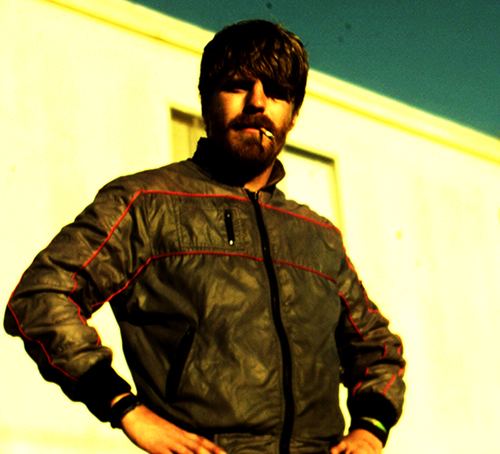
Bellflower Writer, Director Evan Glodell
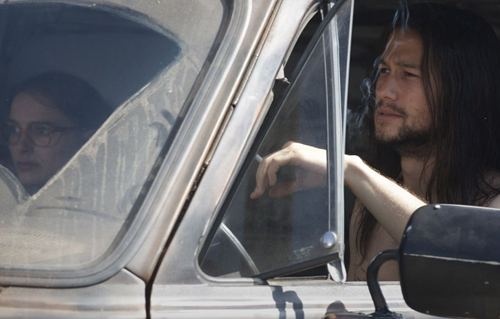
Ever since it’s explosive premier at last year’s Sundance Film Festival, Evan Glodell’s feature film debut Bellflower has been on a nonstop power ride of success. Merely six days after its premier, the film was picked up by the prominent indie film distributor Oscillscope Laboratories for nation-wide theatrical distribution. It’s one of the few indie gems to come out recently that has received nearly universal praise from critics and audiences alike for its jarring, yet beautiful visuals and disturbingly shocking and tantalizing story.Yet, what’s most fascinating about Bellflower and the mastermind behind it, writer/director/star Evan Glodell, is the sheer innovation and unique approach he took to making this film. From its faintly post-apocalyptic and tortured romantic story, to the technical innovations pioneered by Glodell through developing his own camera lenses and rigs, and even building the film’s trademark (and utterly badass) car, Bellflower is an achievement in independent cinema that hasn’t been seen in years.
Meets Obsession was fortunate enough to talk with Mr. Glodell about the film; what he had to go to get it made, its influence, and the overwhelming critical reception his recent release has garnered.
Meets Obsession: Obviously, the film is heavily influenced by Mad Max as the mythology and legacy looms over the actions and motivations of Woodrow and Aidan, can you talk a bit about how that theme became so prevalent in the film?
Evan Glodell: The idea that came to me was that they were just building a flamethrower and a car. From there I had to work backwards and figure out “well, why are they building these things”. It was all the things that my friends and I were obsessed with- Mad Max and that whole ideology. It was one of those things that just got built up over time.
Meets Obsession: The film has a very specific and unique vision, and the story is very personal, what inspired you to write this film?
EG: It was a relationship that I went through a long time ago, when I was a lot younger. It was very intense, both good and bad. And afterwards, I think I kinda went like “holy crap”; I had no idea that I was going to go through something that was this intense. So the idea for the movie came from me trying to cope with that.
Meets Obsession: Alcohol seems plays a central role in the narrative development of the film. Was this something that you intentionally wrote out in the beginning?
EG: [Laughs] Yes, it was. I just remember that there was a time period in my life where everyone around me was drinking all the time. I wanted to keep that element, so we made it like a competition to make sure there was as much alcohol as humanly possible in this movie.
Meets Obsession: Your film is a wholly unique and original vision—everything from the story to the style and the method of which you went about to make this film. Can you talk a little bit about your role from writing, directing, and acting all the way to the car and camera rigs you built to make this film?
EG: Definitely acting. I disliked acting. That was the only part that was especially difficult for me. The other stuff just came very naturally. I’ve been trying to get this movie made for so long that anything I’d do in my free time, any skills that I had, would go toward getting this movie made. I was always doing stuff to try and make this movie. I’d start building this thing for the , or designing that. So it wasn’t like I started working on all these things when we started production, I was just always working on it, every skill I had was applied toward the movie.
Meet Obsession: I know you made this film on a shoestring budget, yet with building the Medusa car as well as all the camera lenses/rigs, I can imagine production had a lot of speed bumps along the way. What were some of the biggest problems you faced in betting this film made?
EG: Since a lot of the stuff was made before we started shooting, we really didn’t run into too many problems. Of course, we had the typical problems movie shoots usually have, when it would rain during shoots, that would obviously be a problem.
Using the cameras that we did, they would break down sometimes and that would be frustrating, especially with everyone on set ready to go. After shooting all day, sometimes the camera would break down and we would be up all night fixing it, and the next day everyone would show up on set ready to go, after we’d been up all night working on the camera. We would have to tell everyone that we needed a minute to just lay down and rest for a bit before getting back to work. It was a lot of work over a long period of time.
MO: Lots of critics are citing your film as a milestone in independent filmmaking, and using it as a prime example that American Independent Cinema is still very much thriving. What sort of expectations did you set out for yourself when you decided to make this film?
EG: I don’t even know how to react to all the praise been getting. Obviously, it’s the coolest thing ever to read stuff like that. Some people are calling it the best movie of the year so far and I think “holy shit”. But I think more accurately, anything I read is just so surreal to me, that this little movie has gotten so much exposure.
I started making this movie thinking “I hope someone sees it”, because that was all it was. We went into hoping at least one person would see this movie, and then they’d want to help us fund our next movie, that was our goal. Then maybe if it was good enough it would show up on Netflix’s Instant Queue with no advertising or anything. That was sort of our far-reaching goal.
MO: The film has a lot of contrasting thematic conflicts going on in it. The duality of chaos and order, love vs. betrayal, etc.. Yet it offers no concrete narrative conclusions. Why did you decide to leave the narrative open to such ambiguity?
EG: The movie to me was always supposed to be very visual to create a sort of hard emotional experience. I spent close to three years just in the editing process, so I spent a lot of time thinking about the movie. One of the things that I spent the most time on was the last third of the movie, because I felt like we were walking this fine line where if became too clear, it’s almost like it would lose face value, and be too filling, too close-ended.
I felt that there had to be a certain amount of confusion where hopefully it would challenge , and not wrap things up too nicely; it had to be an emotional jolt. So that was the thing that I definitely spent the most time trying to achieve
Keep it loud